


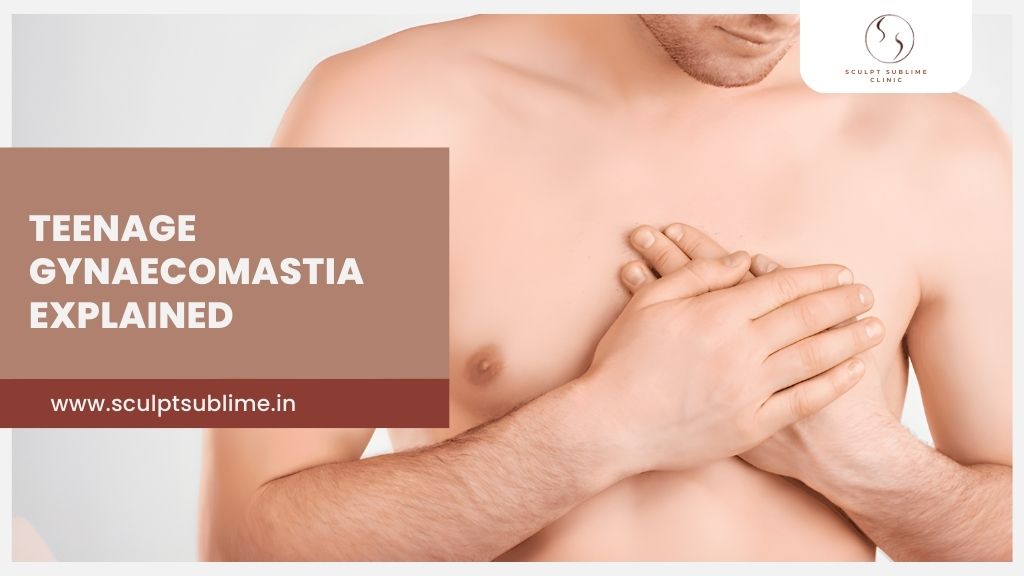
In clinical practice at Sculpt Sublime, parents and adolescents often raise concerns about chest changes during puberty. These concerns often arise quietly and without urgency, yet they cause understandable anxiety within families.
In most cases, the explanation lies in Teenage Gynaecomastia, a condition that reflects normal pubertal development rather than disease. When families understand the medical basis of this change, they can approach it with reassurance, patience, and appropriate medical guidance. And understanding pubertal gynecomastia resolution brings reassurance.
What Happens in the Body During Puberty
Puberty involves a gradual and complex shift in hormone levels. Testosterone increases steadily, while oestrogen activity fluctuates at various stages. During certain phases, breast tissue temporarily responds to these hormonal changes.
This response leads to the development of glandular tissue beneath the nipple. The process may affect one side before the other and often causes mild tenderness. These patterns commonly worry families, but they follow predictable biological behaviour.
Medical studies show a 40-65% incidence peak at Tanner stages 3-4, during which individuals experience this temporary tissue response, which usually resolves as hormonal balance stabilises.
Understanding the Difference Between Glandular Tissue and Chest Fat
Accurate assessment begins with distinguishing glandular enlargement from fat-related chest fullness. These two conditions appear similar but behave very differently.
Glandular tissue feels firm, defined, and localised beneath the nipple. Fatty tissue feels soft and spreads evenly across the chest. Weight changes influence fat but do not cause glandular growth.
This distinction matters clinically. Misinterpreting glandular tissue as weight-related can lead to unnecessary dietary restriction, excessive exercise, or misplaced self-blame in adolescents.
Common Symptoms and What They Mean
Teenagers usually notice changes gradually. Symptoms rarely appear suddenly.
Typical features include:
- Firm swelling beneath one or both nipples.
- Puckering or a disc-like feel under the nipple
- Mild tenderness or sensitivity
- Temporary asymmetry between sides
- A sensation of tightness during early development
These features reflect active tissue responding to the effects of pubertal hormones. They do not indicate infection or malignancy. I recommend evaluation if enlargement progresses rapidly, causes persistent pain, produces nipple discharge, or occurs outside the usual pubertal age range.
Why Hormonal Fluctuations Cause These Changes
Hormones act locally at the tissue level. Even when testosterone levels remain normal, breast tissue may temporarily respond to oestrogen activity.
This mechanism explains why blood tests rarely alter management in straightforward cases. Clinical examination often provides more precise answers than laboratory values alone.
Certain medications can influence hormonal balance. These include drugs that affect hormone metabolism or block testosterone action. Anabolic steroids and unregulated supplements may also contribute. I assess these factors carefully without assuming behavioural or lifestyle causes.
Rare endocrine or systemic conditions account for a small minority of cases.
Get ready for your procedure with these top male breast reduction prep tips simple steps for a smoother surgery and recovery.
How I Assess and Diagnose the Condition
I begin with a detailed conversation and physical examination. I ask about the timing of changes, progression, associated discomfort, medication use, and overall pubertal development.
In most adolescents, examination alone provides sufficient clarity. The findings follow patterns consistent with normal pubertal change.
I reserve blood tests or imaging for atypical presentations, such as very early onset, rapid progression, or additional systemic symptoms. Routine investigations rarely benefit adolescents and often increase anxiety without improving care.
The Role of Observation and Reassurance
Observation forms the cornerstone of management. Observation does not mean ignoring the condition. It involves monitoring changes over time, addressing discomfort, and providing reassurance as puberty progresses.
Hormonal balance continues to evolve over months and years. In many adolescents, glandular tissue reduces or resolves completely without intervention. Clinical guidelines consistently support observation as first-line management during adolescence.
Early intervention often targets a process that would otherwise correct itself.
Concerned About Puberty-Related Chest Changes?
When Treatment May Be Appropriate
Most adolescents do not require treatment. I consider medical therapy only in select cases where symptoms persist and cause ongoing discomfort despite appropriate observation and treatment.
I discuss surgical options, including male breast reduction, only after puberty has completed and physical maturity is evident. Persistent glandular tissue that continues beyond adolescence and causes functional or psychological difficulty may justify further evaluation at that stage.
I approach such decisions cautiously, with full parental involvement and informed consent, ensuring that all parties are fully informed and aware of their rights and responsibilities.
Psychological and Social Considerations
Although medically benign, chest changes can affect self-confidence during adolescence. Some teenagers avoid swimming, sports, or social situations as a result.
I address these concerns openly while maintaining a factual and measured approach. A clear medical explanation often reduces emotional distress more effectively than any physical treatment.
Family support and professional guidance play a vital role during this phase.
When to Seek Medical Advice
Families should seek medical evaluation if breast enlargement persists, progresses rapidly, or causes significant discomfort. Professional assessment confirms normal development and identifies the rare cases that require further attention.
My aim remains consistent. I provide clarity, reassurance, and appropriate guidance while avoiding unnecessary intervention.
When to Consult
Seek evaluation at Sculpt Sublime for persistent (>1 year), painful, or rapidly enlarging tissue. Early review rules out rare pathology and confirms normalcy.
Frequently Asked Questions
Can pubertal breast tissue resolve at different rates on each side?
Yes. Uneven regression is a common occurrence that typically improves over time.
Does physical exercise reduce glandular breast tissue?
Exercise improves general health but does not directly reduce hormonally driven glandular tissue.
Should adolescents avoid sports due to tenderness?
Mild tenderness does not require activity restriction. Protective clothing may improve comfort.
Can medications taken during puberty affect breast tissue?
Some medications influence hormone balance. A clinical review helps assess relevance.
Does early evaluation change the natural course of the condition?
Early evaluation provides reassurance and guidance but does not alter natural resolution in most cases.