


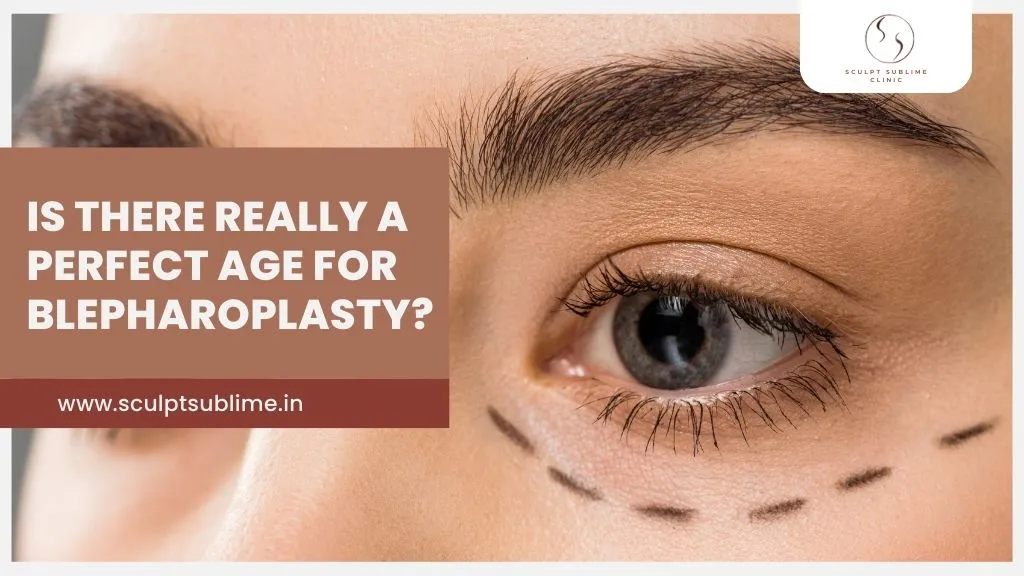
In the high-octane professional circles of Mumbai, your face often acts as your silent CV. There is a particular frustration when your mental sharpness and physical stamina are at their peak, yet your eyelids feel heavy. It creates a permanent look of sleepiness (or somnolence) that doesn’t align with your actual mood.
While traditionally viewed as a corrective procedure for the 50+ demographic, 2026 has seen a definitive shift. Today, prejuvenation (the practice of proactive, subtle intervention) is the new standard for Millennials and Gen Z, who want to maintain their natural peak rather than wait to reclaim it later.
The Prejuvenation Shift: Why 20s and 30s are the New Prime Time
For younger patients, the motivation for blepharoplasty eyelid surgery is rarely about reversing the effects of time. Instead, it is about anatomical optimisation.
- The Genetic Factor: Many younger Indians inherit heavy upper lids or lower-lid fat pads that create shadows even after a full night’s rest. Addressing these in your late 20s or 30s isn’t vanity. It’s correcting a structural trait that makeup cannot hide.
Tissue Preservation: Modern surgical philosophy suggests that smaller, maintenance procedures performed while skin elasticity is at its highest yield more natural results. By removing focal fullness early, you prevent the skin from stretching, which often delays the need for more invasive surgery in your 50s.
Eyelid Tightening in Your 30s & 40s: Correcting the Anatomical Inheritance
In our Mumbai practice, we frequently see patients with an inherited eyelid structure that creates deep shadows, often referred to as hereditary eye bags.
- The Scarless Approach: Because skin elasticity is still high in younger patients, we often utilise the transconjunctival technique. By working within the lower lid, we can reposition fat pads without a single external incision. It is an efficient, one-time correction that resets your anatomical clock with zero visible scarring.
- The Baby Bleph: This conservative approach focuses on strategic fat contouring rather than large-scale skin removal. It ensures you look like the most refreshed version of yourself, not like you’ve had work done.
Considering Surgery in Your 60s: Function Meets Aesthetics
As we move into later decades, the conversation shifts from shadows to physical weight. This is the era where upper blepharoplasty becomes transformative.
The Field of Vision Factor (Functional Blepharoplasty)
For our older patients, we focus on clearing the visual axis. If your upper lid skin is resting on your lashes, it acts like a literal curtain. According to the British Association of Aesthetic Plastic Surgeons (BAAPS), eyelid surgery is frequently sought not just for aesthetic reasons, but also to restore a wider field of vision. The intent is to make everyday tasks (like driving at night or reading) significantly more comfortable.
Understanding the Investment: Eyelid Surgery Cost in India
Investing in preventative surgery is often more cost-effective than a lifetime of temporary fillers or high-end topicals. Mumbai offers world-class precision at a competitive price point.
Check Your Brow Fatigue Today
Mumbai Avg (2026) Comparison Table
Procedure Type | Mumbai Avg (2026) Est. Cost (INR) | Primary Goal | Recovery (Days) |
Upper Blepharoplasty | ₹60,000 – ₹1,00,000 | Remove hooding / Fix vision | 7 – 10 |
Lower Blepharoplasty | ₹80,000 – ₹1,75,000 | Erase bags/shadows | 10 – 14 |
Combined | ₹1,40,000 – ₹2,50,000 | Total refresh | 10–14 |
Recovery: Getting Your Sparkle Back (A Timeline)
Modern techniques focus on social downtime. The time until you can comfortably return to your lifestyle without visible signs of surgery.
- Days 1–3: Expect mild swelling. The time to rest your eyes and avoid high-intensity screens.
- Day 7: Sutures are typically removed. Most patients in Mumbai return to office work at this stage.
- Week 2: Bruising typically fades completely. The ideal time to discuss a broader facelift healing journey, if you are looking to harmonise your lower face as well.
Frequently Asked Questions
1. Am I too young for a blepharoplasty?
There is no such thing as too young for blepharoplasty if the concern is structural. If you have hereditary eye bags or hooded lids that affect your confidence, a conservative procedure in your 20s or 30s can provide a permanent solution that grows with you.
2. Does this fix dark circles?
Only if shadows cause the circles, if your dark circles are due to protruding fat pads casting a shadow, surgery will fix them. If the cause is skin pigmentation, we may suggest laser treatments in conjunction with surgery.
3. How long do the results last?
Lower blepharoplasty is often a once-in-a-lifetime procedure. The fat pads we remove do not typically return. Upper blepharoplasty results usually last 10–15 years, though starting younger often results in better long-term skin quality.
4. Will my eye shape change?
No. We focus on subtractive rejuvenation. We remove the noise (excess fat/skin) to reveal your natural eye shape, ensuring you look like you, just on your best day.
5. Can I combine this with non-surgical treatments?
Yes, and it’s often recommended. Many younger patients combine a Baby Bleph with Botox or skin boosters to maintain a seamless, glowing result.