


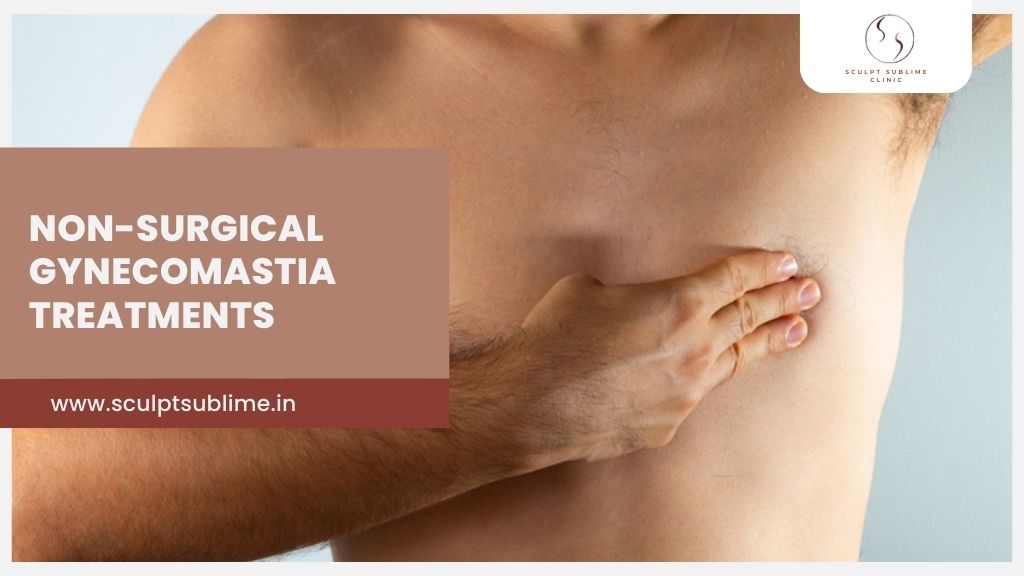
I frequently encounter men at my Mumbai clinic who have spent years exhausting every possible gynecomastia treatment without surgery. These individuals often arrive after enduring a frustrating cycle of restrictive diets, endless pectoral exercises, and expensive herbal supplements. Such methods promised a flatter profile but delivered only disappointment.
As a surgeon, I believe in providing clarity rooted in clinical reality. If you struggle with enlarged male breasts, you deserve to understand why “natural” remedies fail. Gynecomastia surgery remains the only definitive path to a permanent, masculine chest.
The Glandular Reality: Why Fat Loss Is Not Enough
True gynaecomastia involves the growth of dense, fibrous glandular tissue. Unlike subcutaneous fat, the gland possesses a firm, rubbery texture. Such a physical presence remains immune to metabolic changes or fat-burning pills.
I often treat incredibly fit athletes who possess minimal body fat yet still carry prominent breast tissue. The gym may strengthen the pectoral muscles. However, building that muscle often pushes the glandular tissue further outward. Such growth makes the protrusion more noticeable. Many patients confuse “pseudo-gynaecomastia”, which is merely excess fat, with true glandular hypertrophy. While weight loss might reduce the volume of a fatty chest, the underlying gland requires surgical extraction. Attempting to diet away a physical gland is like trying to exercise away a mole. The biological structure does not function in that manner.
Why Non-Surgical "Cures" Fail
The market overflows with topical creams and “hormone-balancing” supplements. I must be blunt: no cream can penetrate the skin to dissolve a solid, mature gland. Furthermore, once glandular tissue matures and stabilises, pharmaceutical intervention rarely succeeds in shrinking the structure.
Many patients also rely on compression vests. These garments provide a temporary aesthetic mask. However, the underlying deformity remains unchanged. Relying on temporary fixes only postpones the inevitable need for a permanent, surgical solution. Constant pressure from tight garments also causes skin irritation and postural issues over time.
Real-World Case: The "Fit" Professional's Struggle
Consider the case of a 28-year-old software engineer from Bandra who visited me last year. He had spent three years on a ketogenic diet. He also performed five hundred push-ups daily. Despite achieving a lean physique, his chest remained prominent. The shape caused him to hunch his shoulders, in an attempt to hide his profile. Upon examination, I identified Grade 2 glandular growth. We performed a gynecomastia surgery to remove the fibrous tissue. Six weeks later, he stood with perfect posture for the first time in his adult life. He confessed that the years spent chasing a gynecomastia treatment without surgery felt like a waste of his youth. His story illustrates that willpower cannot overcome biology.
The Sculpt Sublime Surgical Standard
I advocate for a surgical approach because the method offers total predictability. My technique focuses on two primary goals: removing the physical obstruction and sculpting the remaining tissue for a natural, athletic appearance.
Micro-Liposuction
I begin by removing the soft fatty tissue surrounding the gland. The process allows me to contour the chest wall. I create a smooth transition toward the abdomen. Using advanced micro-cannulas, I ensure the remaining fat layer stays symmetrical and smooth. I avoid the “crater” look that less experienced surgeons might produce.
Surgical Gland Excision
I then perform a meticulous excision to remove the firm glandular tissue through a tiny, hidden incision. I usually place the entry along the lower border of the areola. Only by physically extracting the gland can I guarantee the protrusion will not return. Such a step is the most critical part of the procedure. Leaving even a small portion of the gland can result in an incomplete transformation.
STOP HIDING UNDER LOOSE SHIRTS!
Comparing the Paths Forward
|
Feature |
Non-Surgical Attempts |
Gynaecomastia Surgery |
|
Primary Mechanism |
Attempted fat loss or masks |
Physical removal of tissue |
|
Gland Elimination |
Impossible |
Permanent |
|
Predictability |
Low to zero |
Guaranteed results |
|
Time Investment |
Years of trial and error |
60–90 minute procedure |
|
Social Impact |
Continued self-consciousness |
Immediate confidence boost |
What to Expect During Your Recovery
A common fear regarding surgery involves a long, painful downtime. At my clinic, I use minimally invasive techniques to ensure the opposite. Most of my patients return to desk work within two to three days. You must wear a medical-grade compression garment for a few weeks. However, the discomfort is typically described as “mild muscle soreness.” The sensation feels similar to a heavy workout.
Addressing the "Scarring" Concern
Men often fear that surgery will leave visible marks. I take great pride in my “invisible” closure techniques. By placing incisions in the natural pigment changes of the nipple, I ensure the healing process leaves virtually no trace. My aim is for you to stand shirtless with total confidence.
Final Verdict: Stop Managing, Start Living
If you have spent months searching for a gynecomastia treatment without surgery, I invite you to look at the evidence. Science confirms that mature glandular tissue requires a physical removal. Every day spent experimenting with unproven supplements is a day lost to insecurity.
I encourage you to stop managing the symptoms and start addressing the cause. I invite you to explore our Gynaecomastia Case Studies to see the transformations we achieve through precision surgery. At Sculpt Sublime, I do not just remove tissue; I restore your masculine profile.
Frequently Asked Questions
1. Can gynaecomastia return after surgery?
Once I surgically remove the glandular tissue, it does not regrow. Provided you maintain a stable weight and avoid hormonal triggers like anabolic steroids, the results remain permanent for life.
2. How soon can I return to the gym?
Most patients resume light walking within forty-eight hours. However, I advise waiting four weeks for the internal tissues to heal perfectly before engaging in heavy chest-pressing movements.
3. Will the surgery leave a "hollow" look?
I avoid a hollow appearance by using a combination of liposuction and gland excision. By leaving a thin, uniform layer of fat beneath the skin, I create a smooth, athletic contour rather than a sunken chest.
4. Is the procedure performed under general anaesthesia?
For your comfort and safety, I typically perform the surgery under general anaesthesia or deep sedation. You feel zero pain during the sculpting process and wake up comfortably.
5. How do I know if I have fat or a gland?
A simple self-test involves feeling the area behind the nipple. If the tissue feels soft like the rest of your body fat, it may be pseudo-gynaecomastia. If you feel a firm, rubbery disc, you likely have a glandular growth that requires surgical evaluation.