


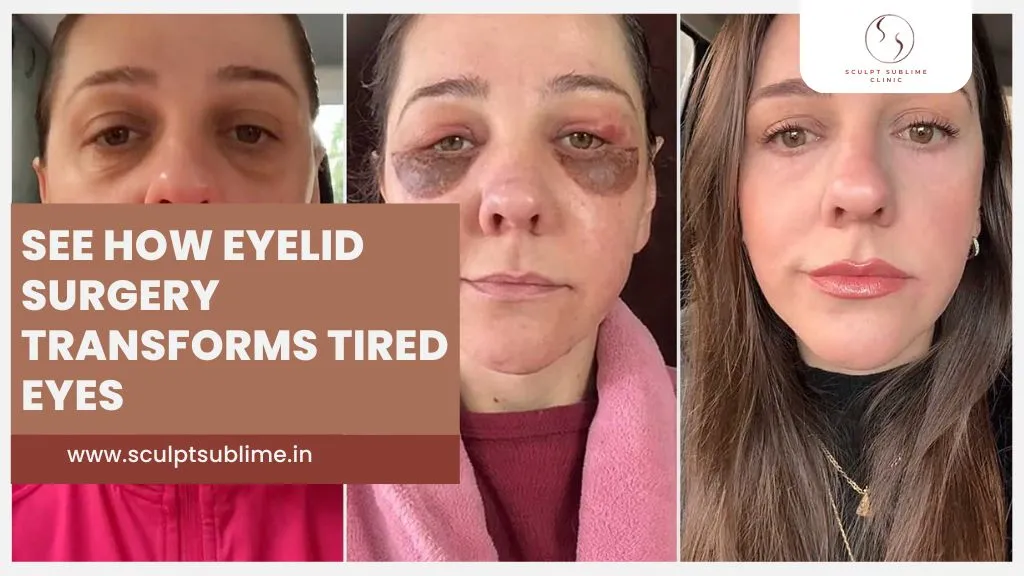
Key Takeaways
- Real blepharoplasty results should look natural, balanced, and preserve your unique facial identity — not “overdone” or artificial.
- Many online before-and-after galleries use lighting, posture, and camera tricks that can exaggerate surgical results.
- Modern eyelid surgery focuses on precision, fat preservation, and scar-sparing techniques for subtle, long-lasting outcomes.
- Choosing an experienced facial plastic surgeon is essential for safe surgery, natural healing, and results tailored to your facial anatomy.
You are not afraid of the surgery. You are afraid of the “after” photo.
You worry about waking up, looking in the mirror, and seeing a stranger. No one wants that hollow, constantly surprised, or “plastic” look.
As an expert in facial plastic surgery, I hear this fear every day. Patients sit in my office at Sculpt Sublime in Mumbai. They hand me their phones. They show me “miracle” photo galleries they found online. They want to look rested and get rid of their heavy under-eye bags. But they are terrified of losing their unique ethnic look.
I get it. Now, I will share a hard truth that many clinics hide. Many eyelid surgery before-and-after photos online are fake.
They are not selling great surgery. They are selling a lighting trick.
At Sculpt Sublime, we treat surgery as a precise medical craft. For our Mumbai patients, top results need micro-precision. We respect Indian facial anatomy. We use scar-sparing methods. A truly great result speaks for itself. It never needs a studio flash.
Let’s pull back the curtain. Before you look at one more photo gallery, I will teach you how to view them like a surgeon.
Spotting the Fakes: The 3 Red Flags
When patients look at a photo, they just look for smooth skin. I look deeper. I check if the eye looks hollow. I check the eyelid crease. If a surgeon only cuts away skin without respecting the underlying muscle, the eye looks surgically altered.
Many online galleries use camera tricks to hide bad surgical work. Here is how you spot them.
1. The Lighting Trap
Harsh overhead lighting in a “before” photo casts dark shadows, making under-eye bags look huge. A soft ring light in the “after” photo washes out all fine lines and scars.
How to spot it: Look at the background wall. If it is dark in the before and bright in the after, they changed the lights.
2. The Posture Shift
Tilting the chin down in a “before” photo uses gravity to exaggerate puffiness.
How to spot it: If the patient’s chin or eyebrows are raised in the “after” shot, that physical pull mimics a surgical lift.
3. Lens Tricks
Shooting the “before” photo up close makes facial features look wide and heavy. Backing up and using a portrait lens for the “after” shot instantly slims the face.
How to spot it: Look at the ears. If you can see them in the before photo, but they hide behind the cheekbones in the after photo, the clinic swapped lenses.
The Ultimate Catchlight Test
Zoom in on the dark part of the eye (the pupil). Do you see a bright white ring of light in the “after” photo that is missing from the “before” photo? That is a ring light. You are not looking at a medical result. You are looking at a photo shoot.
Table 1: Real vs Fake Clinical Photos
What to Check | Genuine Clinical Photo | Fake Gallery Photo |
Lighting | Same brightness in both. | Dark shadows first, bright light later. |
Head Angle | Face is perfectly straight. | Chin down first, chin up later. |
Ear Visibility | Ears look the same in both. | Ears vanish in the second photo. |
Eye Reflection | Same light dot in the pupil. | Giant white ring light in the second photo. |
Blepharoplasty Before and After: Real Patient Results
To show you what true, unedited healing looks like, here are five real scenarios from our clinics. (Note: Patient privacy is strictly protected. These represent typical outcomes.)
1. The Corporate Leader (Lower Eyelid)
- The Problem: A 45-year-old manager had deep, genetic under-eye bags. He looked tired even after eight hours of sleep. He wanted zero visible scars.
- The Surgery: Transconjunctival lower blepharoplasty. I went inside the lower lid to remove the fat. No cuts on the outside skin.
- The Result: The bulky shadows vanished. The cheek and eye blended smoothly. He went back to work in six days.
2. The Makeup Struggle (Upper Eyelid)
- The Problem: A 40-year-old woman felt her eyes looked angry. Her upper eyelid skin drooped so much that it hid her eyelashes. Her makeup smudged daily.
- The Surgery: Precise upper blepharoplasty. I removed exact millimetres of skin and hid the stitch line in her natural eye fold.
- The Result: Her eyes opened up. Her appearance was soft and approachable again. At six months, the tiny pink scar faded completely.
3. The Asian Blepharoplasty
- The Problem: A 32-year-old patient wanted a visible upper eyelid crease (double eyelid). But she refused to lose her distinct ethnic look.
- The Surgery: A highly tailored crease creation. We did not remove much fat to keep the lid full and youthful.
- The Result: A crisp, natural fold that enhanced her eye size perfectly without the westernised look.
4. The Uneven Eyes (Asymmetry)
- The Problem: A 50-year-old teacher had one eyelid that drooped much lower than the other. She hated taking photos.
- The Surgery: Calibrated upper eyelid lift. I removed more tissue on the left side to match the right.
- The Result: Perfect harmony. Natural faces are never 100% perfectly identical. We aimed for balance, and she gained massive confidence.
5. The Hollow Look (Revision Surgery)
- The Problem: A 58-year-old came to us after a poor surgical procedure at another clinic. The old surgeon took out too much fat. Her eyes looked sunken and skeletal.
- The Surgery: Fat repositioning and structural grafting. We put volume back into the lower lid.
The Result: The hollows filled in. She looked healthy, rested, and like herself again.
The Real Healing Timeline
Many people think eyelid surgery is a quick fix. You will look fine for a dinner party in two weeks. But your deeper tissues need time to heal. It takes a full year for the skin to drape perfectly over the new shape of your eye.
For our Mumbai patients, Indian skin needs extra care to stop dark scars. That is why we focus strictly on advanced surgical methods rather than fads, to ensure clean, lasting results.
Table 2: The Honest Recovery Timeline
Timeframe | What You See | What You Feel |
Days 1 to 3 | Puffy, swollen, some bruising. | Tightness, but very little pain. |
Days 5 to 7 | Stitches come out. Bruises turn yellow. | Much more relaxed. |
14 Days | Most swelling is completely gone. | Ready for work and light makeup. |
6 to 12 Months | Final, flawless result. Scars vanish. | Completely natural and settled. |
Enhance your eyes with subtle, balanced facial surgery.
The Sculpt Sublime Challenge
Are you ready for the truth about your eyes? Do not base your face on a lighting trick.
If you are considering eyelid surgery, bring those miracle photos to my clinic. We will sit down. I will point out the camera tricks. Then, I will tell you exactly what is truly possible for your actual bone structure.
Get honest answers. See unedited photos. Get a surgical plan built just for you.
Book Your Consultation with Dr Ranjit Bhosale today.
Frequently Asked Questions
How long does it take for eyelid surgery scars to fade?
Scars fade into tiny, invisible lines within 6 to 12 months. We hide cuts in natural folds or inside the lower lid so they stay out of sight.
Why do my eyes look smaller right after surgery?
Swelling makes eyes look smaller at first. As the fluid leaves over the first 14 days, your eyes will look much brighter and wider.
Will my upper and lower lids heal at the same time?
No. Lower lids usually heal faster with less bruising. This is especially true if we use the scar-free inside-the-lid method.
Do blepharoplasty results last forever?
Fat removal is mostly permanent. Upper eyelid results usually last 10 to 15 years before natural skin ageing catches up.
Does Asian blepharoplasty change my natural eye shape?
No. A skilled surgeon creates a natural double eyelid crease while preserving your ethnic identity and distinct eye shape.