


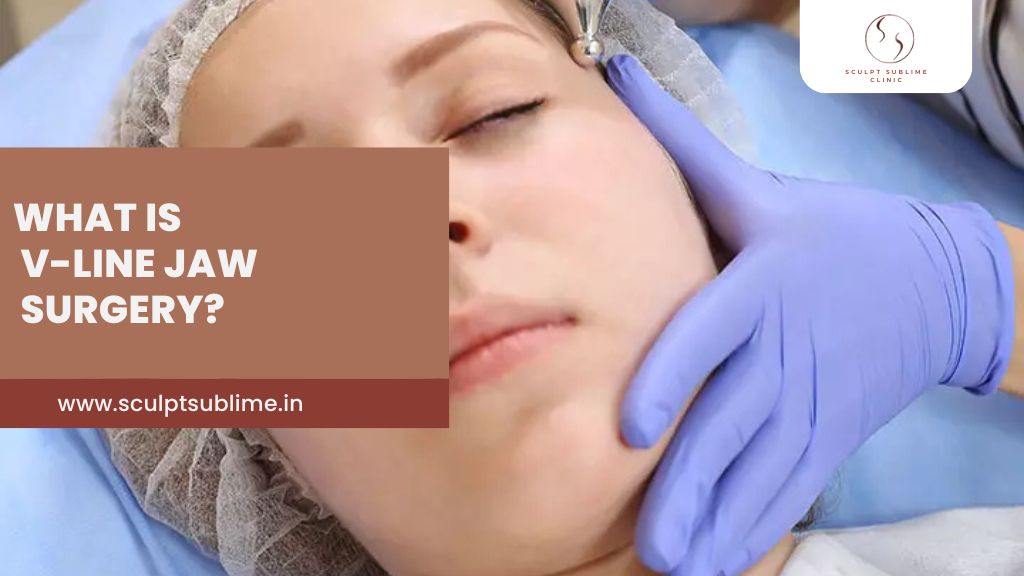
If you are exploring options for Jaw Surgery Mumbai, you will likely have encountered terms like V-Line surgery, mandibular contouring, and facial bone contouring. While these procedures are increasingly popular, marketing hype often outpaces medical clarity. Whether your goal is a sharper jawline, a narrower lower face, or improved facial contours, understanding the underlying bone structure is the first step toward a safe, natural outcome.
At Sculpt Sublime, we provide education backed by anatomical reality, not aesthetic trends. In this guide, we break down what V-Line surgery entails, who is an ideal candidate, and how professional planning ensures your results look like a refined version of yourself rather than an obvious surgical transformation.
Key Takeaways
- Refining Shape: V-Line jaw surgery is a form of facial bone contouring that aims to improve the lower face and jawline definition.
- Comprehensive Planning: The best results come from planning the jaw, chin, and soft tissue together rather than treating the jaw in isolation.
- Recovery Reality: Recovery includes swelling and a soft-diet period; final contours emerge slowly over several months.
- Candidate Selection: Good candidates are healthy adults with realistic expectations and anatomy that supports safe contouring.
- Risk Awareness: Procedures involve risks like numbness or asymmetry, making expert consultation mandatory.
Is a V-Shape Right for You?
V-Line surgery reshapes the lower face by refining the jaw angle and width. These results are generally long-lasting when the surgeon tailors the procedure to your unique bone structure and bite function. It is not just about bone removal; it is about achieving balanced facial proportions that complement your specific anatomy.
What is V-Line Jaw Surgery
V-Line jaw surgery (often referred to as jaw contouring surgery, jaw reduction surgery, or facial bone contouring) is a procedure designed to reshape the lower third of the face. The “V-Line” refers to the tapered appearance that starts at the jawline and narrows to the chin, creating a slim, elegant silhouette.
It is vital to distinguish this from non-surgical treatments. While dermal fillers or anti-wrinkle injections can temporarily soften the appearance of the jaw, they cannot change bone structure. Jaw contouring is a surgical intervention that modifies the mandible. Crucially, any surgical planning must account for functional bite requirements and the precise location of the mandibular nerve to ensure safety.
Facial Anatomy and Lower-Face Balance
To understand the procedure, you must understand the architecture of the lower face. A complex interaction between the mandibular bone, the masseter muscles (chewing muscles), subcutaneous fat, and the skin envelope determines your facial outline.
A square or broad jaw may result from:
- Bone Prominence: A naturally wide mandibular angle or heavy bone structure.
- Masseter Hypertrophy: An overdeveloped chewing muscle, often caused by genetics.
- Soft Tissue Distribution: The way fat and skin drape over your underlying bone.
Effective facial contouring surgery is about assessing how all these layers interact. Sometimes, the jaw looks wide not because the bone is too large, but because the chin lacks sufficient projection. Comprehensive planning addresses these nuances to maintain a cohesive appearance.
Bone Contouring Principles
The goal of jawline reshaping is to create a smoother, more aesthetic line while maintaining the functional integrity of your bite and chewing mechanism. Modern surgical principles favour conservative contouring (preserving enough bone to support the facial muscles and skin), preventing premature sagging while achieving the desired taper.
A successful procedure respects your unique facial anatomy. A jaw that looks elegant on one patient might look overly gaunt on another. The surgeon’s task is to achieve balanced facial proportions for your specific bone structure, ensuring the lower face remains in proportion to your mid-face and forehead.
Surgical Techniques Used in Jaw Contouring Surgery
Depending on your anatomy, your surgeon may employ several techniques:
- Mandibular Angle Reduction: Trimming the back corner of the jawbone to soften a wide angle.
- Border Shaving: Reducing the width of the lower jaw edge to create a slimmer profile.
- Ostectomy: The precise removal of a section of bone to narrow the jaw.
Often, the surgeon combines these techniques with lower-face contouring measures, such as masseter muscle reduction. If your jaw looks square due to a lack of chin definition, your surgeon may also suggest Genioplasty Surgery to improve projection.
Who is a Good Candidate?
You may be a candidate for V-Line surgery if:
- You have a naturally wide or square lower face that you wish to taper.
- You are in good general health with no uncontrolled medical conditions.
- Your bite is stable, or you are willing to address bite function as part of your surgical plan.
- You have realistic expectations regarding the degree of change possible.
Candidates must understand that this is a bone-modifying procedure. It is not suitable for those who cannot permit themselves a significant recovery period.
Recovery Timeline
Recovery after jaw reduction surgery requires patience. The initial phase involves:
- Swelling and Tightness: Peak swelling usually occurs within the first 72 hours.
- Soft Diet: You will need to consume liquids and soft foods for several weeks to allow the jaw to heal without strain.
- Activity Restriction: Strenuous exercise must be avoided for several weeks to assist healing.
While the downtime is manageable, the social recovery (the time required for subtle swelling to resolve so you feel fully present in social settings) can take several months.
Risks and Complications
As with any major procedure, cosmetic jaw surgery carries inherent risks. These can include:
- Temporary or prolonged numbness in the lower lip or chin.
- Asymmetry during the healing process.
- Infection or delayed wound healing inside the mouth.
- Bite shifts or chewing discomfort.
Choosing an experienced surgeon who prioritises both aesthetics and safety is essential. Because the jaw sits close to vital nerves and teeth, precision in planning and follow-up care is mandatory.
Expected Aesthetic Outcomes
The ideal outcome is a slimmer, more refined lower face that looks naturally proportionate. Patients often report the result as a more elegant version of their existing profile.
When planned correctly, the result complements the mid-face and enhances the neck’s overall contour. For more on achieving a refined lower face, see our blog on Double Chin Surgery Mumbai.
When Genioplasty or Chin Surgery Helps
Many patients seeking V-Line surgery discover that they do not need their jaw narrowed (they need their chin projected). A chin that is too short often makes the entire lower face appear wider. By performing a genioplasty alongside jaw contouring, the surgeon can create a stronger, more tapered appearance that aligns perfectly with the lips and nose.
ACHIEVE A BALANCED FACIAL PROFILE
Consultation and Treatment Planning
A thorough consultation at Sculpt Sublime involves:
- Clinical Examination: Assessing your bite, bone structure, and soft tissue.
- Imaging: Using X-rays or scans to map the mandibular bone precisely.
- Goal Setting: Defining whether you prefer subtle refinement or a more significant contour.
- Medical Screening: Ensuring you are fit for surgery.
For those considering Jaw Surgery Mumbai, your consultation should be an open dialogue where you can review your surgeon’s philosophy on balanced facial proportions.
Take the Next Step
A well-defined jawline can enhance facial balance, confidence, and overall facial aesthetics when performed with precision and expertise. At Sculpt Sublime, every jaw surgery procedure is carefully planned to suit your unique facial structure, ensuring natural-looking and harmonious results. Led by Dr. Ranjit Bhosale, our team is committed to delivering personalised care, advanced surgical techniques, and comprehensive support throughout your journey. If you’re considering jaw surgery, schedule a consultation with Dr. Ranjit Bhosale to discuss your goals, learn more about our approach, and take the first step toward achieving a balanced, refined facial profile.
Frequently Asked Questions
Is V-Line surgery permanent?
V-Line jaw surgery is generally long-lasting because it changes bone structure, but the final result still depends on healing and long-term stability.
Does the procedure require a long hospital stay?
Hospital stay depends on the complexity of the procedure; some patients go home the same day, while others need short observation.
Will I have visible scars?
Most jaw contouring is performed through incisions made inside the mouth, leaving no external scarring on the face.
Can I combine this with other procedures?
In some cases, jaw contouring may be combined with chin surgery or soft-tissue procedures when anatomy and treatment goals support it.
How do I know if I need genioplasty?
Your surgeon will assess chin projection and facial balance during the consultation to determine whether genioplasty is appropriate.