


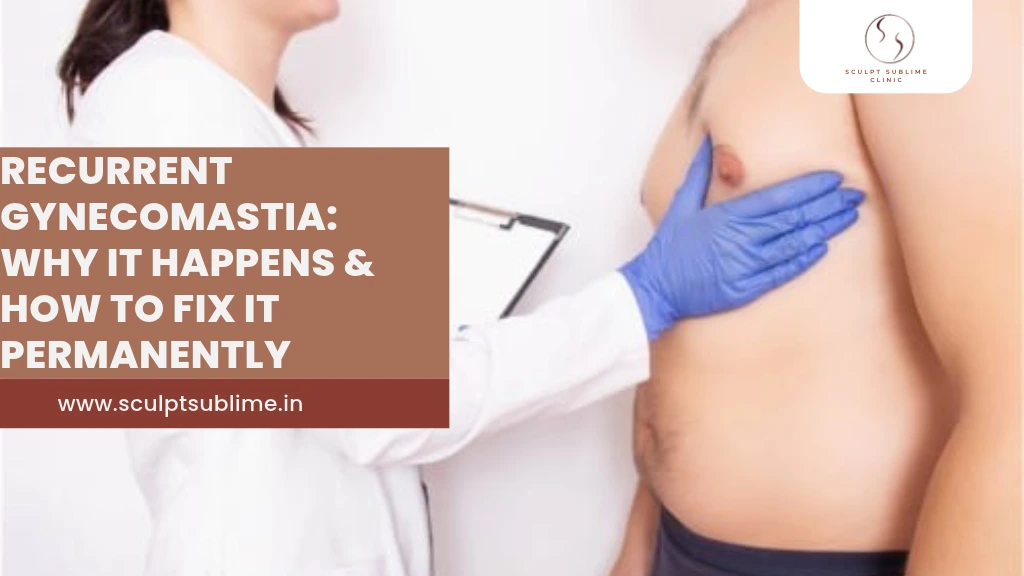
Noticing chest fullness again after surgery can be frustrating, especially when you thought the problem was behind you. However, recurrent gynecomastia doesn’t always mean your surgery has failed. If you’ve undergone gynaecomastia surgery in Mumbai and are noticing puffiness, a firm patch, or changes in your chest contour, the cause could be residual glandular tissue, fat accumulation, scar tissue, or hormonal changes. Understanding what’s causing the change is the first step towards finding the right solution.
Keytakeaways
- Does gyno come back after surgery? Sometimes. Often it’s residual tissue or fat, not a new gland.
- Weight gain, steroids and certain medicines are the usual triggers.
- Wait for healing to settle before judging the result.
- Treat the cause before planning revision.
- A hard lump, nipple discharge or skin dimpling needs prompt review.
What Is Recurrent Gynecomastia?
It’s enlarged male breast tissue that appears after a previous correction. But “recurrent” gets used loosely. Four different things can hide behind it:
- Residual gland: tissue left behind, only noticeable once swelling fades
- Fat gain: a fuller chest without a new gland
- Healing changes: swelling or scar tissue
- True regrowth: remaining hormone-sensitive tissue enlarging again
Four causes, four different next steps. That’s why guessing doesn’t work.
Can Gyno Come Back After Surgery? Why It Sometimes Does
Yes, it can. Whether it does depends on what’s driving it.
Was Some Glandular Tissue Left Behind?
Residual tissue isn’t regrowth. It was always there, hidden under swelling. Surgeons also walk a fine line: remove too little and fullness remains, remove too much and you risk a dent. Experience matters here more than any brochure admits. Scar tissue can also feel like a lump, and it’s sometimes mistaken for recurrence.
Is It Weight Gain or Pseudogynecomastia?
Liposuction removes fat cells, but the remaining ones can still enlarge if you gain weight. That soft, spread-out fullness is pseudogynecomastia, and it behaves differently from glandular tissue. Surgery may not be the answer to fat alone.
Could Steroids or Finasteride Be the Culprit?
Anabolic steroids, unprescribed hormones and some medicines, including finasteride and spironolactone, are linked to breast enlargement in men (NIH). Never stop a prescription on your own. Talk to your prescriber.
Is a Hormonal Imbalance Behind It?
Shifts in the oestrogen-to-testosterone balance, or thyroid, liver or testicular problems, can trigger new growth (StatPearls, NCBI). If the enlargement is new and progressing, bloodwork is sensible. Fixing the chest without checking this is like mopping a floor under a leaking tap.
Is It True Recurrence or Just Normal Healing?
What you notice | Likely explanation | Sensible next step |
Firm, uneven chest weeks after surgery | Swelling, scar maturation | Follow recovery plan |
Stable firm area appearing as swelling settles | Residual gland or scar tissue | Get examined |
Soft, broad fullness after weight gain | Fat | Review weight and need for assessment |
New or growing fullness after full recovery | Residual tissue or new trigger | Clinical review |
This isn’t a self-diagnosis tool. A hard or fixed lump, nipple discharge, nipple retraction, or armpit swelling requires prompt attention.
How Do You Fix Recurrent Gynecomastia Permanently?
“Permanently” is a big word, and I’d rather be straight with you. Surgery can correct a confirmed problem for the long term. What it can’t do is freeze your biology. Weight, hormones and medicines still matter.
What Does Revision Gynecomastia Surgery Involve?
Revision isn’t a repeat of the first operation. Scar tissue changes the anatomy, so planning starts with your history, photographs and any records from the earlier surgery. When the cause is a persistent contour problem, a well-planned revision is often what finally ends the cycle of wondering.
Why Treat the Root Cause First?
If a drug, hormone or health condition is feeding the growth, operating first only invites a repeat. We sort that out before anything else.
Do You Need Liposuction, Gland Excision, or Both?
Liposuction | Gland excision | |
Targets | Fat | Firm glandular tissue |
Best for | Soft, diffuse fullness | Firm disc behind the nipple |
Limits | Can’t remove dense gland | Needs careful contouring to avoid dents |
Many chests have both, so combining them often gives the most balanced result. Benefits include a flatter contour, easier clothing choices, and, for many men, real relief from self-consciousness. If that weight sounds familiar, our piece on the mental health impact of gynecomastia may resonate. Cost varies with the extent of correction, whether it’s a first procedure or a revision, and facility needs. We give a clear estimate only after examining you.
Concerned About Recurrent Gynecomastia?
How Can You Stop It Returning After Revision?
No one can promise your chest will never change. You can stack the odds in your favour.
Should You Keep a Stable Weight?
Yes. Big swings alter contour. If your weight is still moving, tell your surgeon before booking.
Why Avoid Steroids and Trigger Medications?
Be open about everything you take, including supplements. Honest history prevents most avoidable setbacks.
What Do Compression and Follow-Up Really Do?
Wear your garment as advised and keep your review appointments. Report changes early, not once they bother you.
Who Is the Right Surgeon to Avoid Recurrence?
Look for someone who treats gynecomastia often, including revisions, and who explains uncertainty instead of hiding it. Ask what they think is causing your fullness, and how they’d tell scar from gland. Be wary of anyone promising “never again.”
Am I a Good Candidate for Revision Surgery?
Probably, if examination confirms a persistent problem, healing has settled (often six months or more), and any medical or medication trigger has been addressed. Perhaps not, if it’s scar tissue, early swelling or mainly fat. Some men are better served by non-surgical options first, and I’ll say so plainly.
Final Thoughts on Recurrent Gynecomastia and Revision Surgery
Recurrent gynecomastia can be frustrating, especially after you’ve already undergone surgery, but new chest fullness doesn’t always mean the condition has returned. The first step is to identify whether the cause is residual glandular tissue, fat, scar tissue, or a hormonal or medication-related trigger. With the right assessment, you can understand your options and decide whether revision surgery is necessary. At Sculpt Sublime, Dr Ranjit Bhosale takes an individualised approach to gynecomastia correction, focusing on the cause of the concern and the most appropriate treatment for your needs. Learn more about Dr Ranjit Bhosale’s experience and his approach to surgical care, or contact us to book a consultation and discuss your concerns.
Frequently Asked Questions
Does gyno come back after surgery?
It can, but new fullness isn’t always true regrowth. Residual tissue, fat and scar tissue can look alike, so examination matters.
How long should I wait before revision?
Wait until swelling and scarring have settled. Your surgeon will time it individually.
Can medication cause it to return?
Yes, some can. Review them with your prescriber and don’t stop anything yourself.