


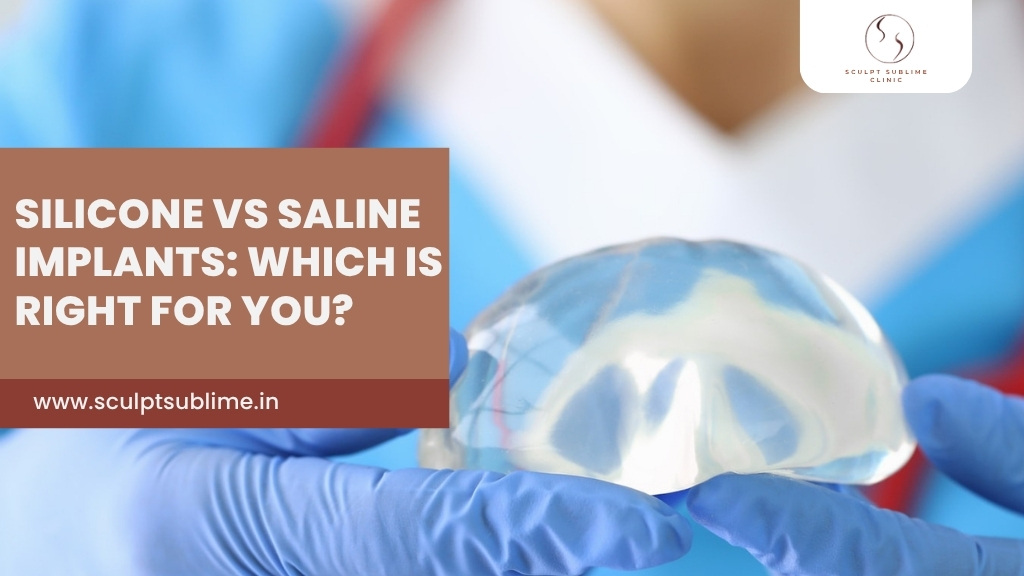
When it comes to breast augmentation surgery in Mumbai, I get asked this almost daily: saline or Silicone? Both are FDA-approved, safe in the right hands, and can provide natural results. Saline is saltwater-filled, budget-friendly, and tells you right away if something’s wrong. Silicone is a cohesive gel that more closely resembles real tissue, but it requires occasional scans. There is no universal winner (just what’s right for you). Let’s talk it through.
Key Takeaways
- Both implants share the same outer shell; only the fill differs.
- Silicone usually feels softer and more natural.
- Saline is more affordable and needs a smaller incision.
- Silicone ruptures can be silent, so I recommend periodic scans.
- Neither type is linked to cancer or connective tissue disease.
- The right choice depends on you, not a trend.
Why Does Silicone vs Saline Matter for Breast Augmentation?
Patients come to me for many reasons. The reasons are more volume, rebuilding confidence after pregnancy or weight loss, or post-mastectomy reconstruction. The surgery is fairly predictable: a small incision near the breast fold or areola, the implant placed above or below the muscle, then closed up. What really shapes your result is what’s inside that implant, and that’s the first thing I discuss.
At Sculpt Sublime, I offer both saline and Silicone, sourced from manufacturers I’ve trusted for years. No jargon, no pressure, just an honest walkthrough of what each option means for your body and lifestyle.
Am I a Candidate for Silicone or Saline Implants?
Likely yes, if you’re in good general health, have realistic expectations, and are done growing. Maybe you’re restoring volume after pregnancy, correcting asymmetry, or planning reconstruction after mastectomy. But I can only say for certain once I’ve examined your skin and existing tissue in person.
Saline vs Silicone Implants: What's the Difference?
What is Saline Implants
Saline implants are filled with sterile saltwater, sometimes after I’ve placed them. The incision for saline implants is generally smaller. If one ruptures, you’ll know right away, your body absorbs the saline, and the breast visibly deflates. Not dangerous, just obvious.
What is Silicone Implants
Silicone implants come pre-filled with a thick, cohesive gel that holds its shape and moves like natural tissue. Most patients report they feel softer and more realistic, especially with less natural coverage. The catch: a rupture can be silent, which is why I recommend routine MRI or ultrasound screening.
Not Sure Which Implant Is Right for You?
Silicone vs Saline Implants: Comparison Table
Feature | Saline Implants | Silicone Implants |
Fill Material | Sterile saltwater | Cohesive silicone gel |
Feel | Slightly firmer | Closer to natural tissue |
Incision Size | Smaller | Slightly larger |
Rupture Detection | Usually immediate and visible as the implant deflates | Often silent; may require imaging |
Monitoring | Routine self-checks | Periodic MRI or ultrasound |
Best For | Budget-conscious patients and some revision cases | Those prioritising a natural look and feel |
Minimum Age (FDA) | 18+ | 22+ |
Neither option has been shown to cause systemic health issues. The FDA’s own review found no confirmed link between either implant and connective tissue disease, cancer, or reproductive problems, though standard surgical risks like contracture or future revision still apply.
If you’re weighing implants against a lift or fat transfer, too? This comparison of the three approaches may help before we meet.
Do Silicone or Saline Implants Ripple Under Clothing?
I hear this often, and it’s a fair question. Silicone gel ripples less under fitted or draped fabric, which matters if you wear sarees or tailored blouses regularly. Saline can ripple a little, especially with less natural tissue, though placement makes a real difference either way.
Silicone or Saline: Which Should You Choose?
Choosing between saline and silicone breast implants comes down to what matters most to you. If cost, easier rupture detection, and a smaller incision are priorities, saline implants may be a good fit. If you’re looking for a softer, more natural feel with less visible rippling, silicone implants may better suit your goals.
Your anatomy, lifestyle, desired results, and personal preferences all play a role in finding the right breast implant for you. That’s why we take the time to understand what you want before recommending an option.
Ready to talk through your options? Contact us to schedule a consultation and take the next step toward your breast augmentation goals.