


KeyTakeaways
- Jaw contouring covers a spectrum of treatments, from injectables and fat-dissolving agents to bone reshaping and implants.
- It’s chosen for both aesthetic reasons (a sharper, more V-shaped profile) and functional ones, like correcting facial asymmetry.
- Non-surgical options offer little to no downtime; surgical contouring gives more dramatic, longer-lasting change.
- Not everyone needs the same approach, as candidacy depends on your skin, bone structure, and the extent of change you’re actually after.
- A proper consultation (not a quiz on the internet) is the only way to know which path suits you.
So, What Exactly Is Jaw Contouring And Why Is Everyone Suddenly Talking About It?
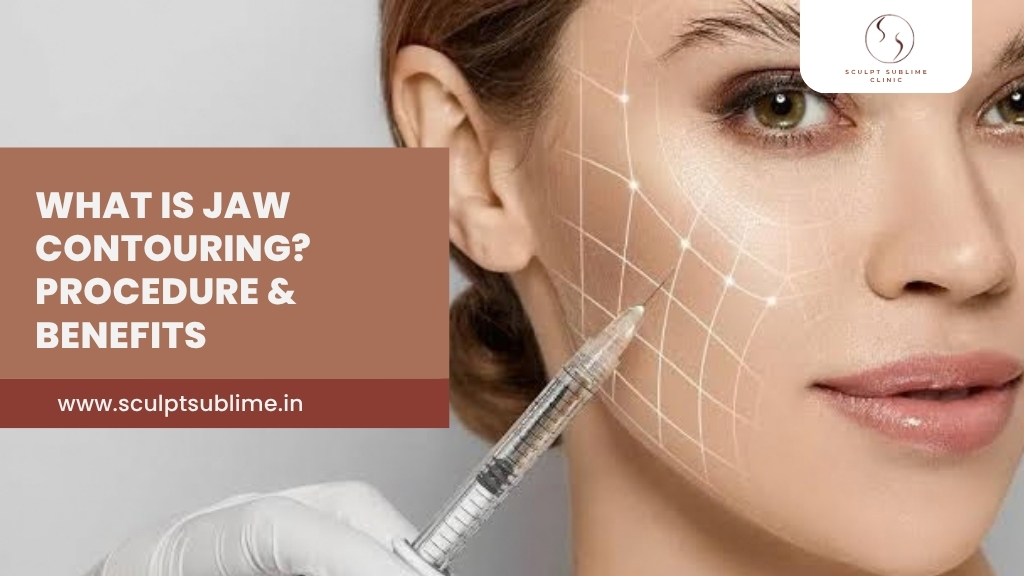
Here’s the thing about the jawline: it’s quietly become the feature people notice first, whether it’s on a video call, in a selfie, or across a dinner table. Jaw contouring is simply the umbrella term for procedures that reshape this lower part of the face (think softening a prominent, square jaw, adding definition to one that looks flat or receding, or correcting an asymmetry that’s bothered you for years). Some patients come in wanting a sharper, more sculpted profile; others just want their two sides to match a little better in photos.
At Sculpt Sublime, this is very much our territory. We have spent years working specifically on facial balance and structure, and what sets our approach apart is that we don’t treat the jaw in isolation, but we look at how it relates to your cheeks, chin, and mid-face before suggesting a plan. That’s partly why we also offer related treatments like cheek volumization, since a well-contoured jaw often looks its best when paired with balanced cheek projection. Depending on what your face needs, the “procedure” could mean anything from a series of injectable sessions to a more involved surgical reshaping of the bone itself, which is exactly what we’ll unpack below.
What Do You Actually Get Out of Jaw Contouring? (And What Should You Budget For?)
Beyond the obvious (a more defined profile), patients tell us the real payoff is confidence. A jawline that’s proportionate to the rest of your face tends to make everything else look more put together, from your smile to how your neck and jaw meet in side profile. For some, it also resolves functional concerns, like jaw asymmetry linked to muscle overuse.
On cost: we won’t throw a number at you here, because it depends entirely on which technique fits your face. Non-surgical plans are typically priced per session, while surgical contouring is a one-time investment that’s quoted after your consultation. The Sculpt Sublime team will walk you through a transparent cost breakdown before you commit to anything, so there are no surprises later.
Am I a Good Candidate for Jaw Contouring?
You’re likely a good candidate if you’re bothered by jaw width, asymmetry, or a lack of definition, you’re in good general health, and you have realistic expectations about the outcome. That said, candidacy genuinely varies by technique. Someone with mostly muscle-related jaw bulk might do very well with injectables, while someone with a structural bone issue may need a surgical approach instead. This is exactly the kind of nuance that gets missed when people try to self-diagnose online, which is why an in-person evaluation matters more than any checklist.
Ready to Define Your Jawline?
Surgical or Non-Surgical: Which Route Actually Fits You?
Non-surgical jaw contouring usually involves dermal fillers, muscle-relaxing injections, or fat-dissolving treatments. It’s quick, requires little to no recovery time, and lets you test a change before committing to anything permanent. The catch is that results fade over months, so touch-ups become part of the routine. According to the FDA, most approved dermal fillers are made from materials the body gradually breaks down, which is exactly why their effects are temporary by design.
Surgical contouring, on the other hand, physically reshapes the jawbone or adds structural support through implants. It’s a bigger commitment (more planning, more recovery), but the results are meant to last. Institutions that specialise in orthognathic (jaw) surgery note that, beyond aesthetics, these procedures can also correct genuine functional issues with how the jaws align.
Non-Surgical | Surgical | |
Best for | Mild-to-moderate concerns, muscle-related bulk | Structural bone issues, dramatic reshaping |
Downtime | Minimal (days) | Several weeks |
Results | Temporary, needs touch-ups | Long-lasting |
Commitment | Low, flexible | Higher, more planning involved |
If you’re weighing this up alongside other facial procedures, it’s worth reading how we approach recovery more broadly in our facelift healing journey guide. Many of the same recovery principles apply here, too. And if your concerns extend beyond the jaw into the mid-face, our mid-face facelift page is worth a look as well.
Frequently asked questions
Is jaw contouring painful?
Most patients describe mild discomfort rather than pain, especially with non-surgical options. Surgical procedures are done under appropriate anaesthesia, so you shouldn’t feel the procedure itself, just some soreness during recovery.
How long do results last?
Non-surgical results typically last for months and require maintenance; surgical results are generally permanent because they change the underlying bone structure.
Will it look natural, or "done"?
A skilled hand makes all the difference here. Our approach at Sculpt Sublime is built around subtle, proportionate change. The goal is a jawline that looks like you, just more defined.
Can jaw contouring fix asymmetry rather than just add sharpness?
Yes, in fact, asymmetry correction is one of the more common reasons patients come to us, not just aesthetic sharpening.
How do I find out which option is right for me?
The only honest answer is a consultation, since your bone structure and goals decide the plan. If you’re ready to figure that out, get in touch with Sculpt Sublime, and Dr Ranjit Bhosale’s team will map out exactly what would work for your face.